
The 1973 Discovery Mainstream Anti-Aging Quietly Forgot
Why the serum that finally works for menopausal skin isn't retinol — and was hiding in wound-healing research for 50 years.

If you're over 40 and your skin changed faster than it should have — drier, thinner, slacker, seemingly overnight — you were probably told two things. That it's "just aging." And that the answer is retinol.
Both of those are why so many women feel let down.
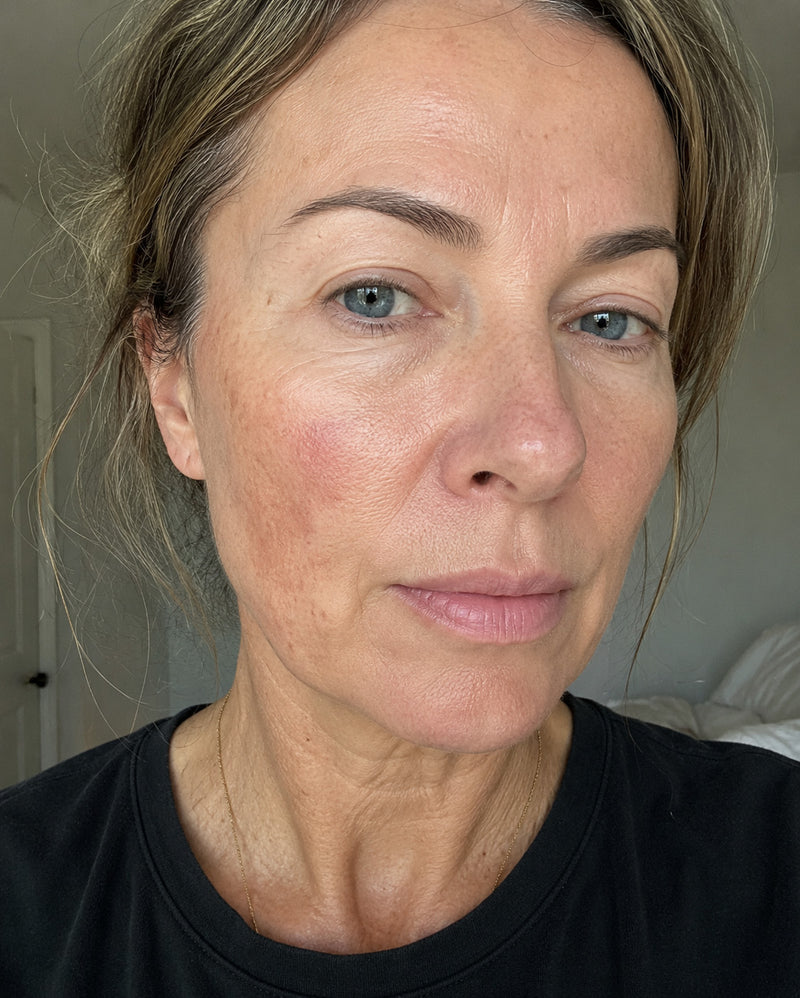
Your skin didn't just age — it hit a cliff
When estrogen drops in perimenopause and menopause, your skin doesn't just lose collagen — it loses it fast. That's not vanity. It's a measurable drop, and it's the real reason your reflection changed.
The repair signal your skin stopped making
Collagen is only half the story. Your skin also makes its own repair signal — a copper peptide called GHK-Cu, naturally present in human plasma. Young skin has it in abundance. As you age, your supply falls.
Your skin isn't broken. It's under-supplied.
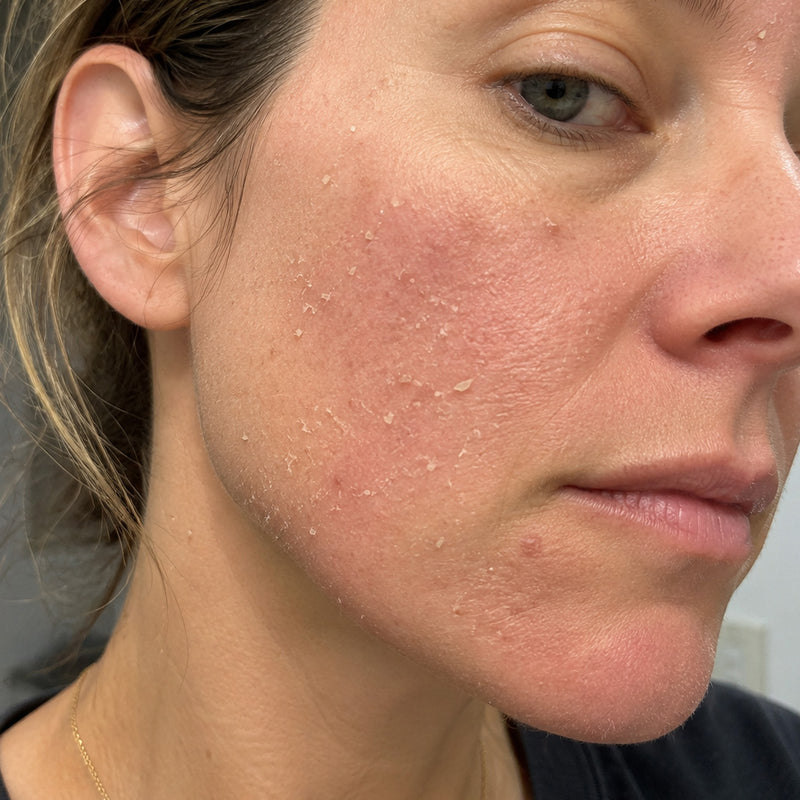
Why retinol so often backfires on midlife skin
Retinol works by forcing skin to turn over faster. On depleted, estrogen-starved midlife skin, forcing it harder is exactly the wrong move — hence the burning, flaking, and "retinol uglies."
"Tret ruined my skin and my eyes. Stay vigilant."
They didn't fail. The mechanism failed them. You fix an under-supplied system by refilling what's missing.
The molecule that was hiding in plain sight
GHK-Cu isn't a new trend. It was first isolated from human plasma in 1973 by Dr. Loren Pickart, who noticed plasma from young donors could make older cells behave young again.
- ✓Studied for decades — wound healing, tissue repair, regeneration.
- ✓Mapped in Nature, 1980 — how it carries copper into cells.
- ✓Forgotten by beauty — the industry had already crowned retinol (FDA-approved 1971).
Not hype. A rediscovery.
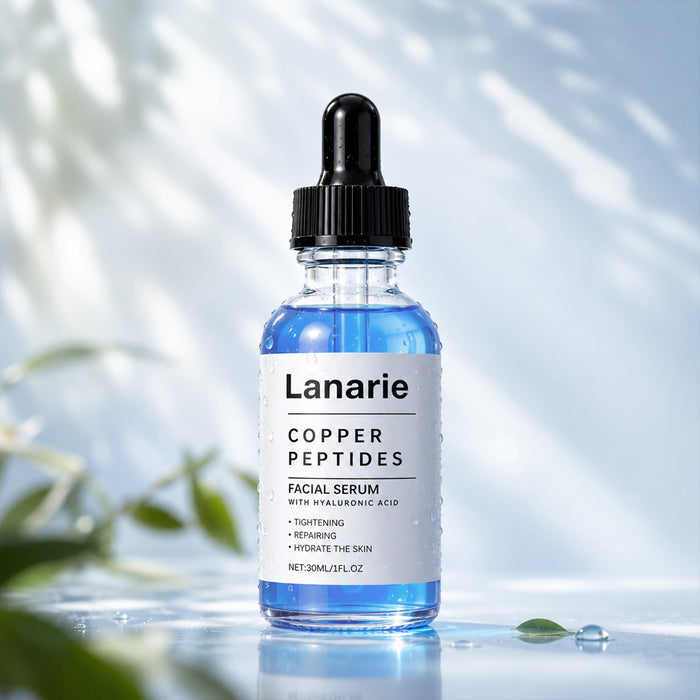
The same repair molecule native to your own skin — delivered gently, with hyaluronic acid and glycerin. No retinol. No acids. No forcing. Repair, without the burn.
See the full formula →Forcing vs. Refilling
Retinol & harsh actives
- ✗ Forces tired skin to turn over faster
- ✗ Burning, flaking, "retinol uglies"
- ✗ Often too much for sensitive midlife skin
- ✗ Adds a foreign chemical to push your skin
Lanarie · GHK-Cu
- ✓ Refills the repair signal your skin lost
- ✓ Repair, without the burn
- ✓ Gentle enough for sensitive, let-down skin
- ✓ A molecule native to your own body
What to expect when you actually stick with it
Real skin change builds in the background. Here's roughly when it shows up.
Hydration kicks in
Skin looks dewier and plumper, feels calmer and less tight.
Texture smooths
Skin starts looking fresher and more even, less rough.
Firmer look builds
The repair signal builds; skin looks more refined over time.
Your new normal
Consistency is everything — the change compounds with daily use.
You weren't foolish. You were handed the wrong tool.
We're not going to tell you this is magic. You were handed the wrong mechanism for the skin you have now. The switch that flipped when your hormones dropped? You can quietly start flipping it back — gently, with the signal your skin has been asking for.
Because the molecule your skin stopped making shouldn't be this hard to get back.