Health · Recovery · Editorial

6 Things I Wish I'd Known When My Hair Started Thinning After Menopause (#4 Changed Everything)

Most of what I tried helped a little. But it was the fourth thing that finally made sense of all of it — and the three before it are why.

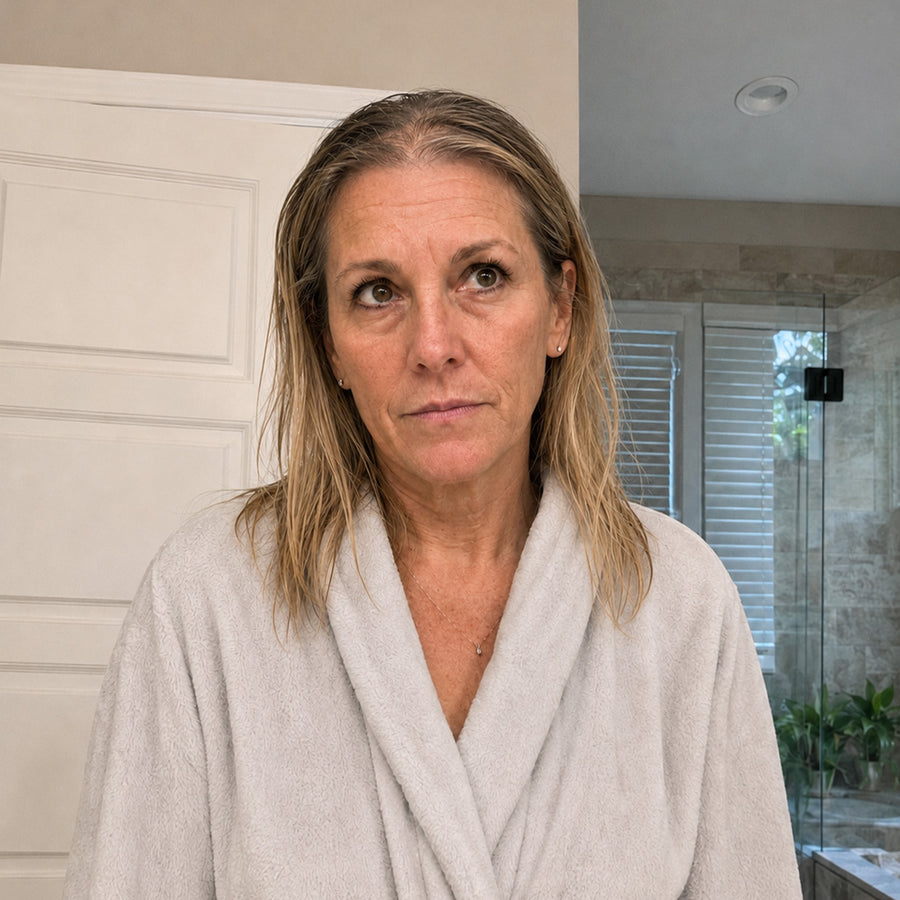
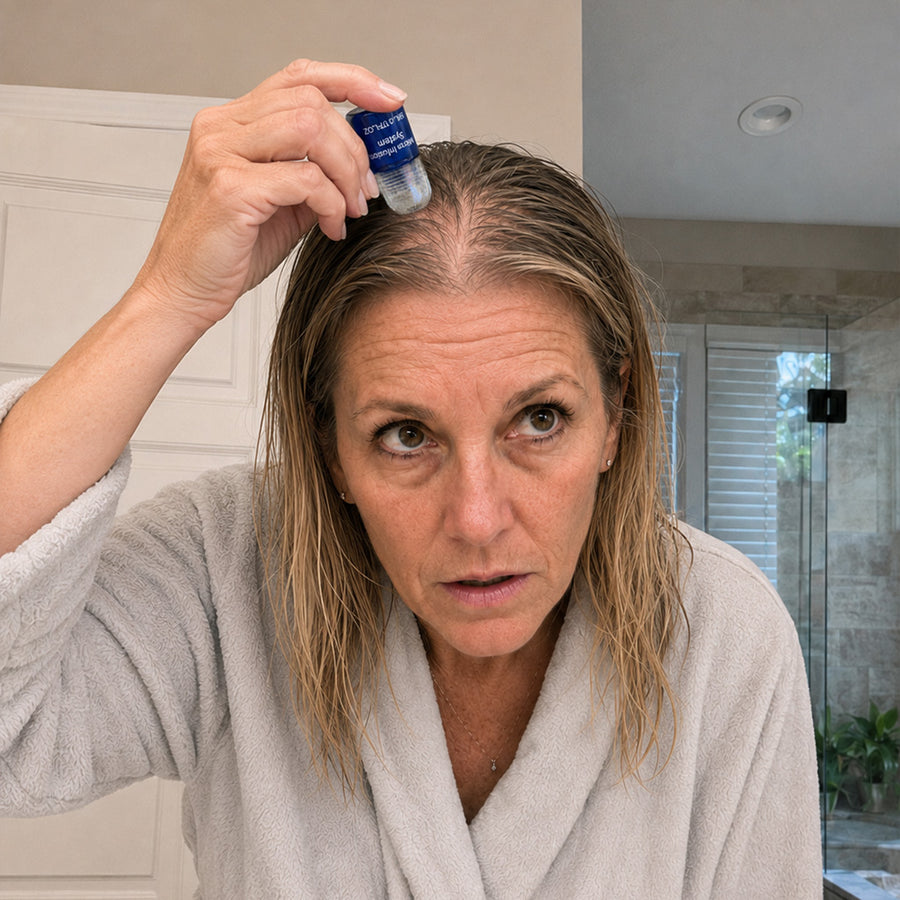
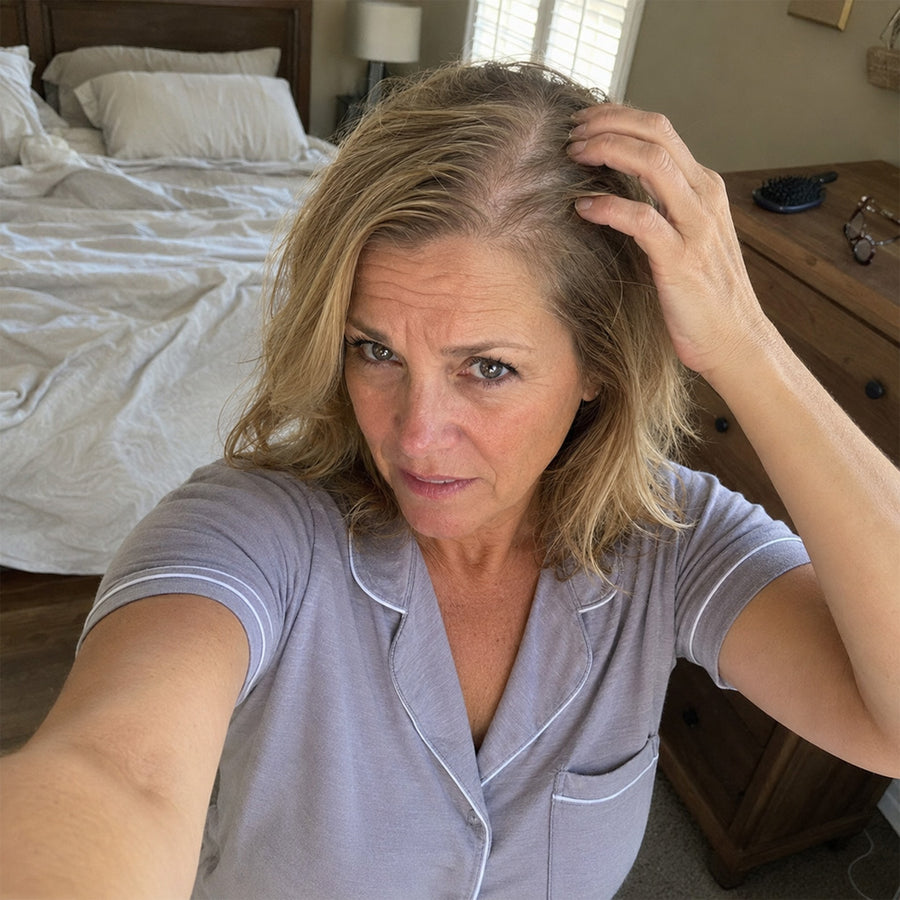
It started with a photo taken from above. My part had gone wide, there was scalp where there used to be hair, and I genuinely didn't recognize the woman looking back. Thick hair had been the thing I liked best about myself for fifty years. Here's what took me two years and a drawer full of failed products to finally understand.

1Reason One

It wasn't just aging, and it wasn't my fault

My doctor gave me the shrug — very normal at your age — and I left feeling like I'd wasted his time over something vain. He treated the whole thing like it was hair loss trivia. So I accepted it as aging and stopped looking for a reason.

That was my first mistake. There was a real, physical reason — several — and none of them was a character flaw. I just didn't know them yet.

2Reason Two

Everything I tried sat on my hair — not my scalp

The thickening shampoos, the rosemary oil, the serums with the little dropper. I'd apply them and most of it slid down my strands or dripped off — my hair looked greasy, like I hadn't washed it in days, and I was never sure any of it reached the spot that was actually thinning.

Turns out that's the whole problem: thinning starts at the scalp, but nearly everything I bought was built to sit on the hair. I wasn't doing it wrong. The delivery was working against me.

I'd been watering the leaves for two years. This was watering the roots. — On the moment it finally clicked
3Reason Three

I was feeding my hair — not replacing what my body had lost

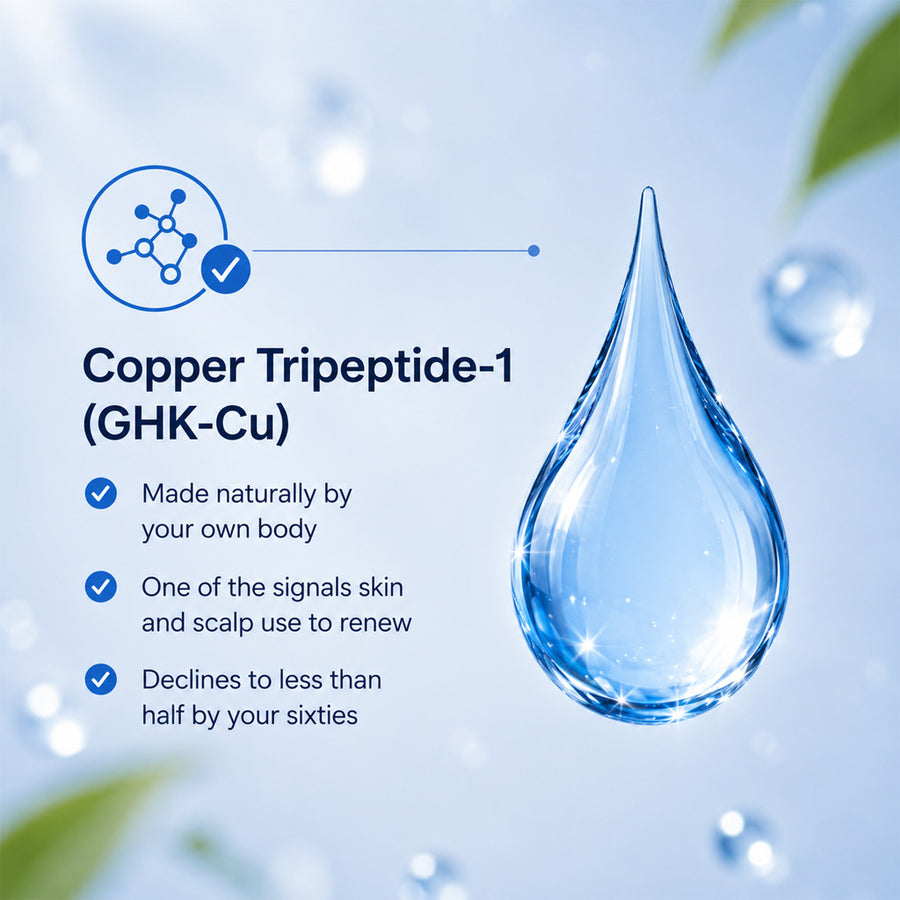
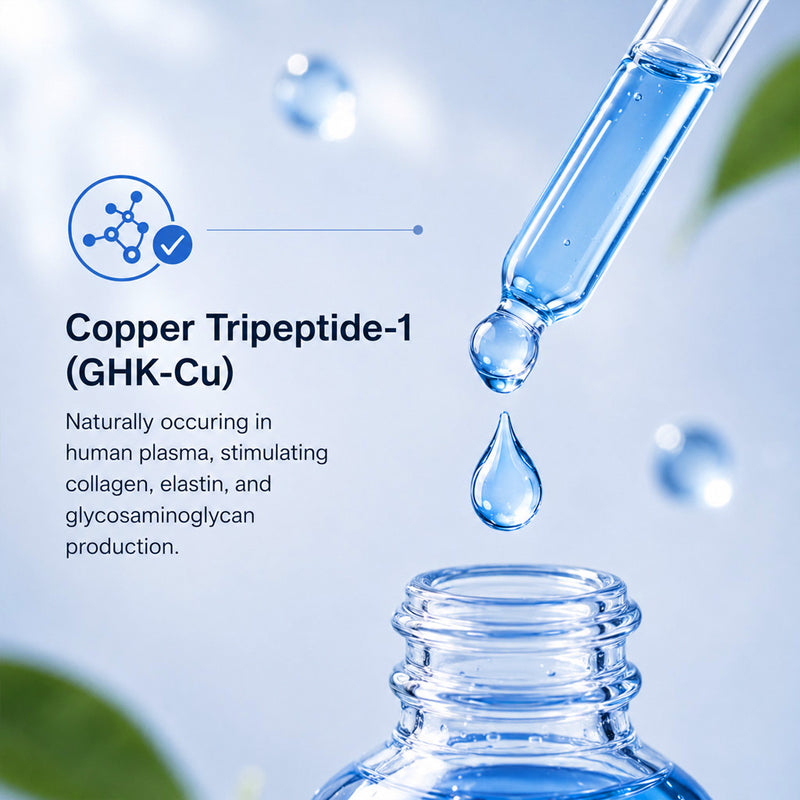
This is the part no one had explained. Your body makes a copper peptide called GHK-Cu, and you have the most of it when you're young — it drops to less than half of youthful levels by your sixties. That decline lined up almost exactly with when I first noticed my ponytail getting thinner.

So all those products working on the surface of my hair were never touching the actual scalp support my body used to have more of on its own.

4Reason Four

The thing that changed everything: getting it into the scalp

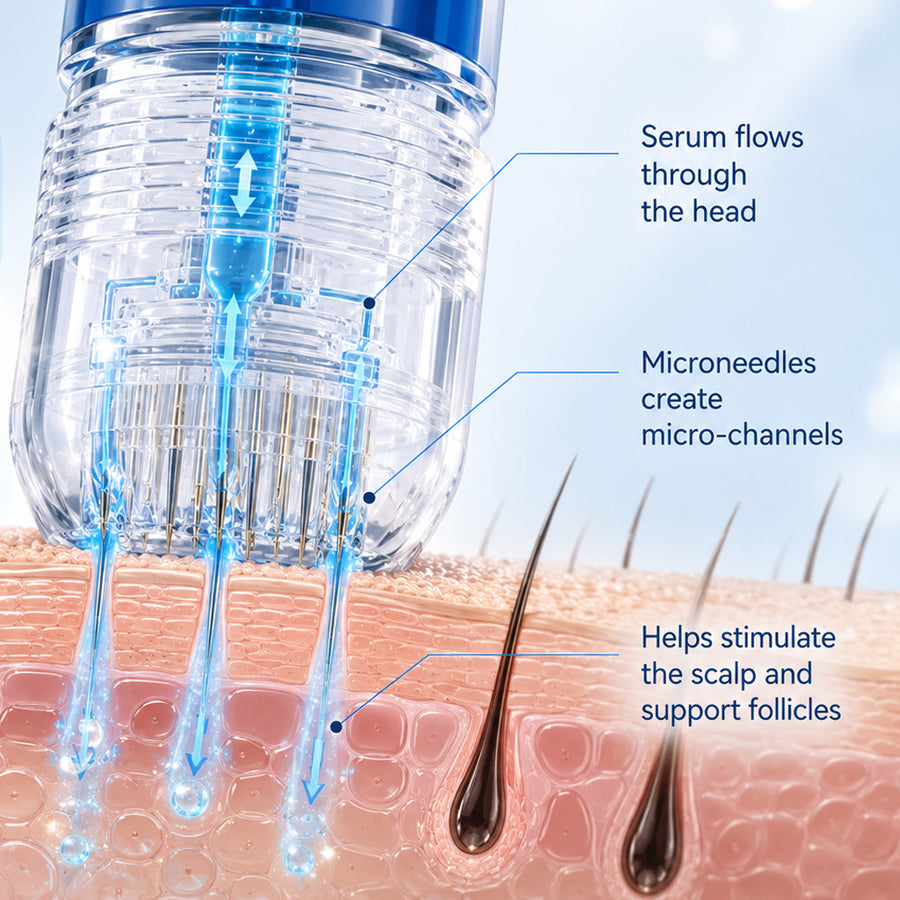
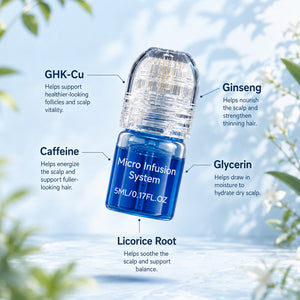
Here's what finally made it click. Dermatology already solved the delivery problem years ago — it's called micro-infusion. A very fine applicator creates tiny temporary channels in the scalp and delivers the serum through them, right where thinning shows, instead of leaving it on the hair to drip away.

When I put reasons 2 and 3 together, the whole thing collapsed into one fix: the right support — a peptide my body had lost with age — finally delivered to the right place. That was the moment I realized nothing had worked because of a specific, fixable reason — not because I was hopeless.

5Reason Five

I was scared it would make things worse — and that fear was fair

I'd held off because of what I'd heard. Women on minoxidil describe a dread shed where hair falls out faster before it slows — one said I feel like I won't survive it mentally. Others got hit with the worst shedding of their lives when they stopped, and were furious no one warned them.

So yes, I was gun-shy. What changed my mind was realizing this was a different door entirely — a simple thing I do at home a couple of minutes a week, working with my scalp, not a daily medication I'd be chained to.

6Reason Six

I'd stopped believing miracles — and that instinct was right

By this point I'd said all the things: supplements are scams, we've all been lied to, eighty dollars a month and it did nothing. I wasn't looking for magic anymore. And that's exactly why this one landed differently — it wasn't a bigger promise, it was just a plain physical explanation for why the other stuff never reached the problem, and a method built around that gap.

Sober. Logical. It respected how many times I'd already been let down. That was the first time in two years I felt like someone was being straight with me — which is what made me want to understand exactly how it works, and who it was made for.

On the hair vs. in the scalp

Droppers · Serums · Supplements
  • Sits on the hair and drips off the scalp
  • Much of the active never reaches the follicle
  • Leaves hair greasy or looking unwashed
  • Often a daily medication you can't stop
  • A drawer full of half-answers
Lanarie Micro-Infusion
  • Delivers serum into the scalp, through micro-channels
  • Targets the part, crown, and temples directly
  • A copper peptide your body makes less of with age
  • A few minutes a week, at home
  • Works with your scalp, not on your hair

Three steps, then you're done

No routine to learn, nothing to monitor. A few minutes, a couple of times a week.

01
Attach the head
Click the micro-infusion head onto a serum vial and part your hair to expose the area.
02
Press against the scalp
Gently move it along the part, crown, and temples with light, even pressure.
03
Let it absorb
The serum settles into the scalp. Done in a few minutes, one to two times a week.
Lanarie Micro-Infusion Kit
The one that made sense

Lanarie Micro-Infusion Kit

GHK-Cu Scalp Serum + Micro-Infusion Applicator

A copper-peptide serum delivered into the scalp — where thinning starts — instead of left on the hair. A few minutes a week, at home.

See how the Micro-Infusion Kit works →

You're not just getting older. You needed the right delivery.

For two years I let my hair make me smaller — skipping the photos, avoiding the bright light, blaming my age. I wasn't hopeless. I was fixing the wrong half of the problem, and the pieces never added up.

If your part has started sending you the same signals somewhere past the halfway point, #4 is the one I'd tell you not to skip.

See how it works →
This is a paid advertisement. The experience described is a representative account based on common customer feedback and may not reflect any single individual. The Lanarie Micro-Infusion Kit is a cosmetic scalp and hair product intended to support the appearance of fuller, healthier-looking hair. It is not intended to diagnose, treat, cure, or prevent any disease or medical condition. Individual results vary. If you have a medical condition affecting your hair or scalp, consult a healthcare professional.