Health · Recovery · Editorial

6 Things I Got Wrong About My Thinning Hair After Menopause — Until #4

I tried everything for 2 years. Then a dermatologist explained the one thing I'd been getting wrong the whole time — and once I fixed it, everything changed.

1Thing One

My doctor told me it was "just aging" — and I believed him

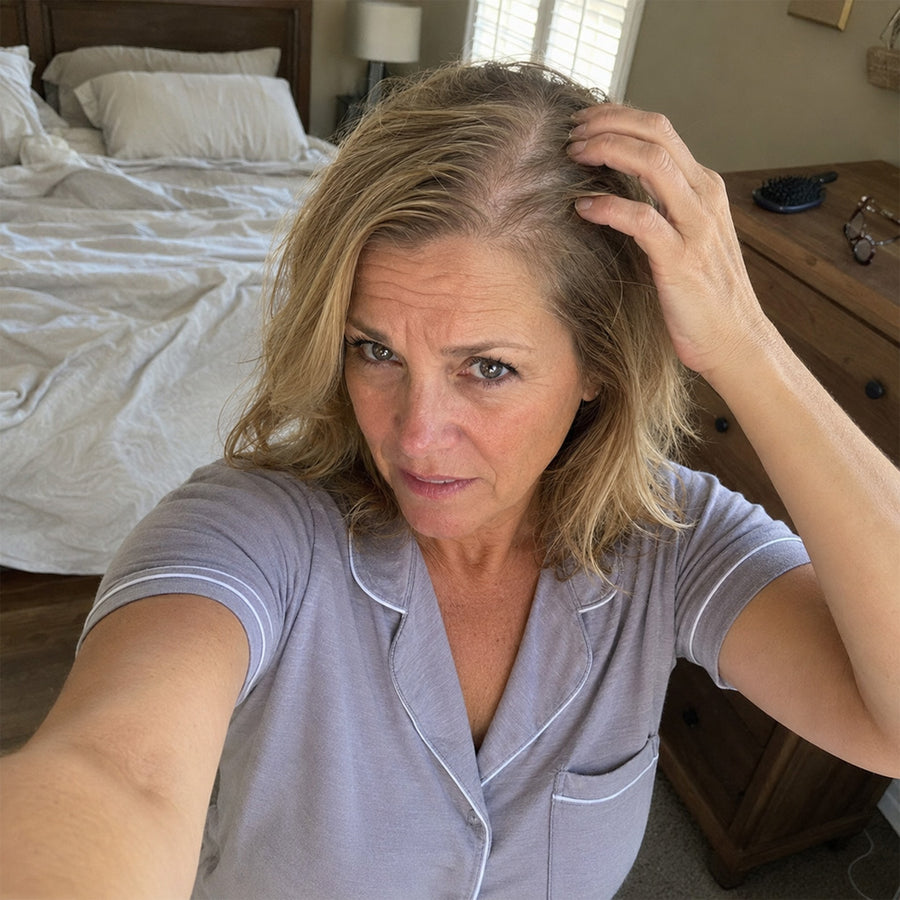
I finally brought it up with my doctor. He looked at my scalp for about two seconds, said "it's very normal at your age," and moved on. I left feeling like I'd wasted the appointment on something vain.

So I did what he basically told me to do. I figured it was just aging and tried to live with it. I stopped wearing my hair up. I started avoiding bright rooms and group photos. Every time I caught my part in the mirror, my stomach dropped a little.

But it never sat right with me. I'd look around the table at my friends — women my age, a few of them older — and their hair was fine. Nobody else was doing the thing I did, angling my head away from the light. If this was just aging, why was it only happening to me?

That's when I started to think there had to be an actual reason for it. Something a two-second glance was never going to catch. The problem was never that there was no answer. It's that I'd stopped looking for one.

And the next thing I got wrong cost me a small fortune.
2Thing Two

I spent $1,300 — and none of it reached the actual problem

So I started buying things. Thickening shampoo. Rosemary oil. A $60 serum with a little dropper. Supplements at $90 a month.

Every time, I'd open the box with a little bit of hope. Maybe this is the one. And every time, nothing. After a while the hope wore down, the same way my hair was.

What I didn't understand back then is that none of it was ever going to reach the problem. It's all made to go on your hair — to make it feel nice and look shinier for a few hours. But the thinning doesn't start on your hair. It starts down at the scalp, and barely any of it was getting there.

I added it up one day and felt sick. Over $1,300 in two years. Bottle after bottle, most of it sliding right off or making my hair greasy, like I hadn't washed it in days.

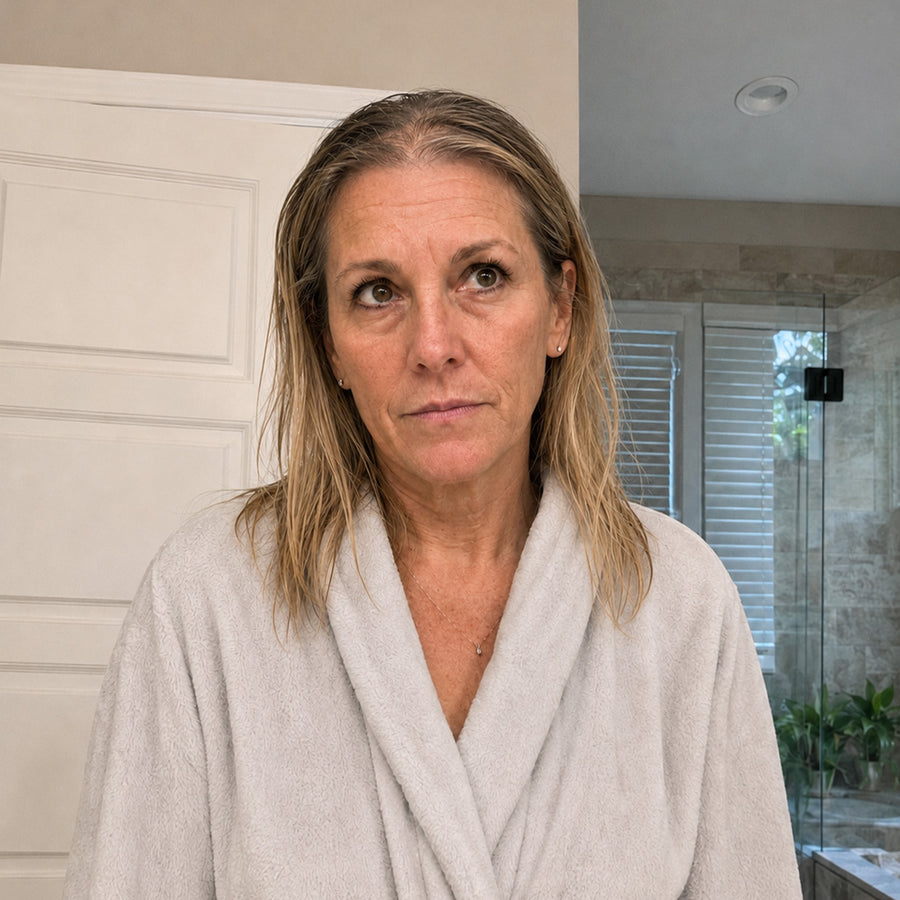
Eventually I stopped guessing and paid to see a dermatologist. What she told me changed the whole way I looked at it.

Your body makes less of it as you get older. That's not something a shampoo can fix.— My dermatologist
Woman realizing her thinning has a cause
3Thing Three

My body had stopped making the one thing that mattered — and nothing I'd tried had it

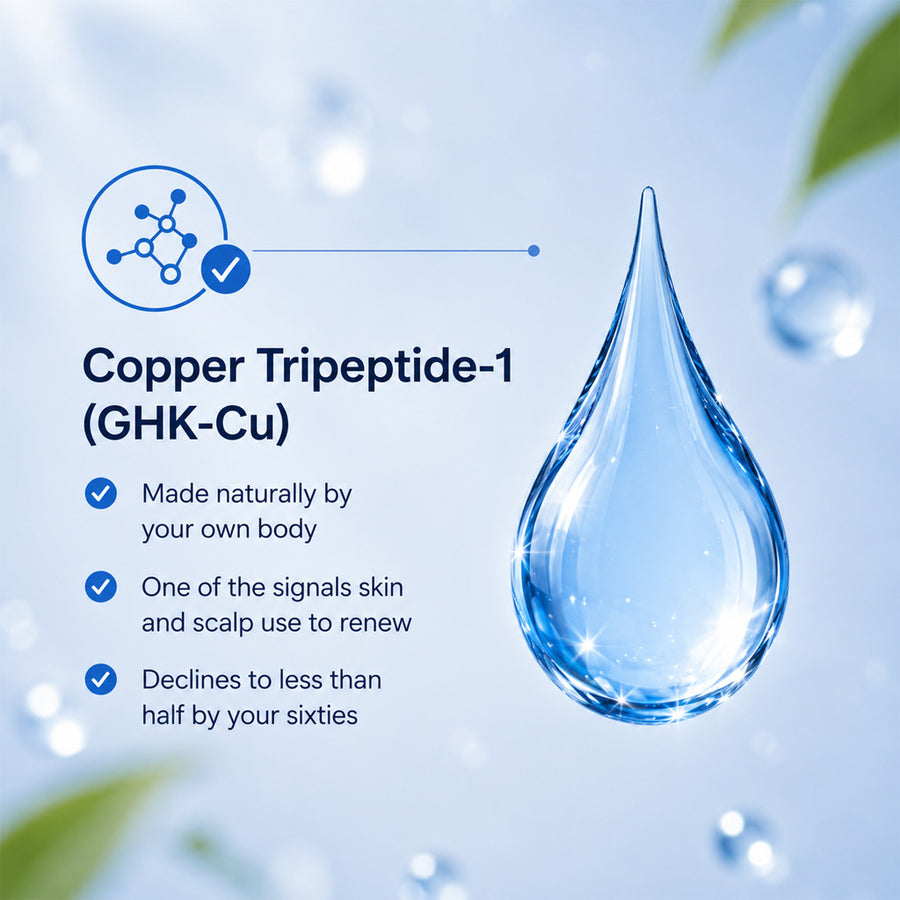
She said a name I'd never heard before. Copper tripeptide-1. GHK-Cu.

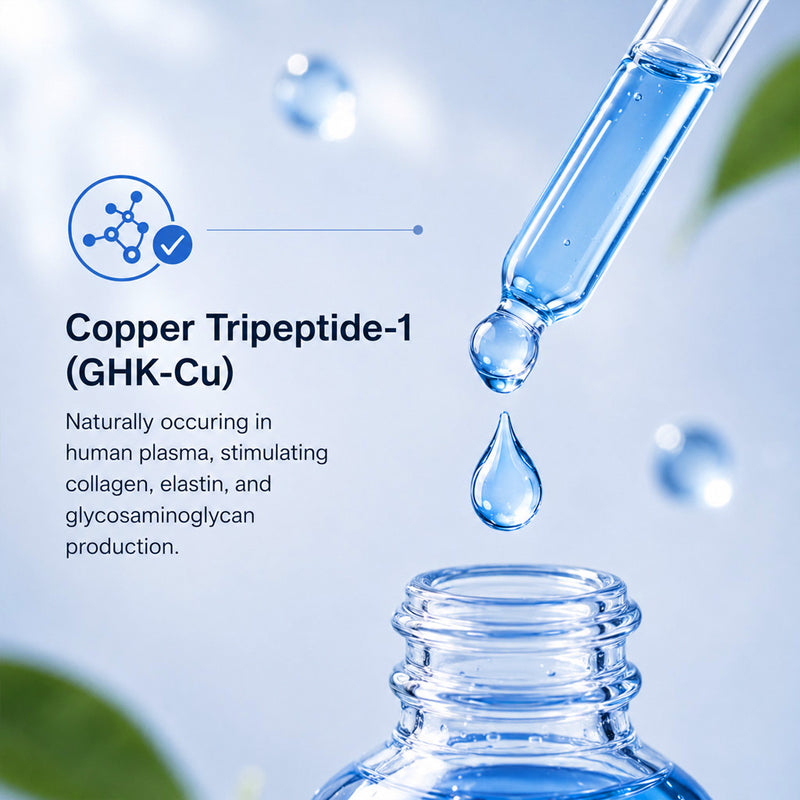
Your body makes it on its own. It's one of the things your skin and scalp use to repair and renew themselves, and it's been studied for decades. You have the most of it when you're young. It drops to less than half by the time you're in your sixties.

I asked her to say it again.

Two years. Two years of being told it was normal, that it was my age, that this is just what happens. Two years of quietly deciding there was something wrong with me. And it was this. Something my body used to make and doesn't make enough of anymore.

I sat there for a second and just felt tired. All that time.

I went home and got out every bottle I'd bought. Lined them all up on the counter and read every label, front and back. Shampoo. Oil. The $60 serum. The supplements.

Not one of them had it. Not one.

So I was left with a different question: if this is what my body lost, how do I get it back?

4Thing Four

The answer wasn't just the ingredient — it was the delivery

My first thought was easy. Find something with GHK-Cu in it, put it on, done.

So I went looking. And the few things I found were the same shape as everything already in my drawer — a bottle and a dropper. Which stopped me, because I knew exactly what those did. They sat on my hair. They made it greasy. That's the whole reason I was in this mess.

So I kept reading. Not the labels this time — the actual dermatology, how any of this is supposed to get where it's going.

And that's where I finally understood the thing I'd been missing for two years. It doesn't matter what's in the bottle if it never gets past your hair. Every product I'd ever bought had been aimed at the wrong place. Even the right ingredient would've done nothing sitting on top of my head.

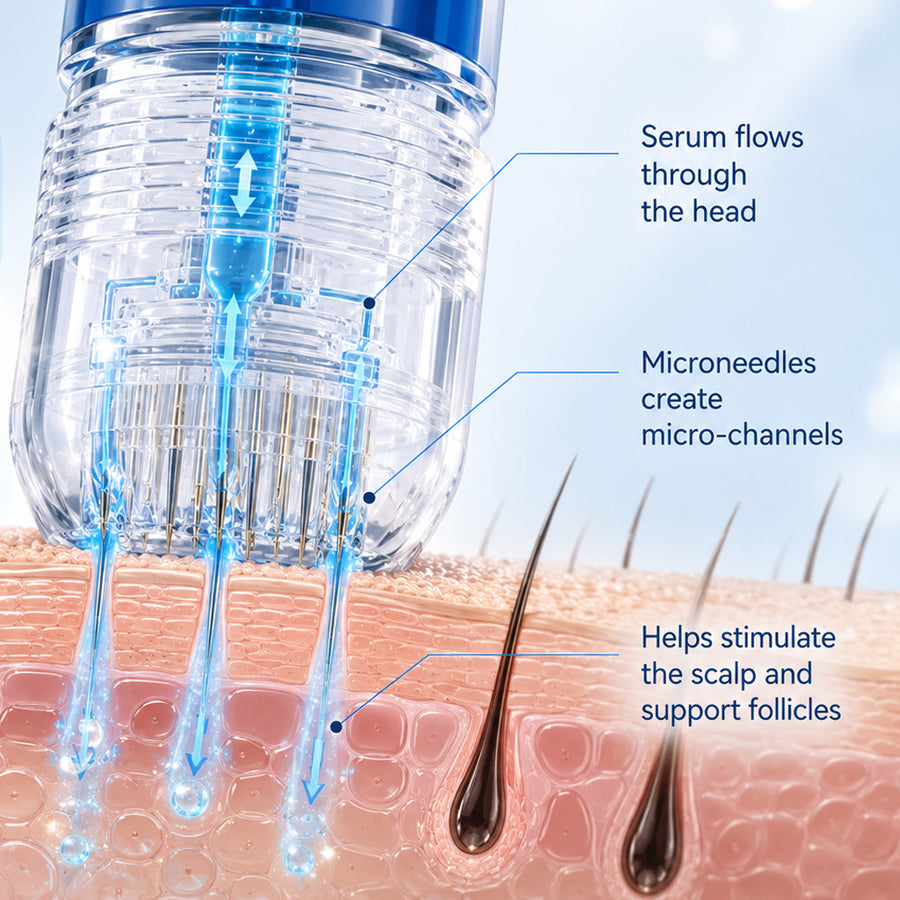
Dermatologists solved this a while ago. It's called micro-infusion. A fine head makes tiny channels in the scalp — big enough to carry the serum down to where it's needed, small enough that you barely feel it. It goes in, instead of sitting on your hair.

And that's when it hit me. I hadn't been doing it wrong. My hair wasn't hopeless. I wasn't too far gone, and I didn't have to just accept it like everyone kept telling me to. I'd had the right idea the whole time. I'd just been putting it in the wrong place.

For the first time in two years, I let myself feel a little hopeful.

And then I got scared. Because there was a reason I'd never tried anything real before.

5Thing Five

I thought anything that worked would come with a "dread shed"

Everyone had told me to just use minoxidil. I never did. Here's why.

My friend Denise started it a couple of years back. Within weeks her hair was coming out faster than before — handfuls of it in the shower. They call it the dread shed. She told me she wasn't sure she'd get through it. And when she finally stopped, it all came out again, worse than when she started.

So that's what I thought "treatment" meant. Get worse first, then either stay on it forever or lose everything. After two years of watching my hair go, I wasn't going anywhere near that.

That assumption is exactly what kept me buying shampoo for two years.

But this wasn't that. It's not a drug. There's no shed on the way in and no crash if you stop.

Which left nothing standing in the way except two years of being let down.

6Thing Six

I'd given up before I ever really tried — and that was the last thing I got wrong

By this point I'd said all of it. Supplements are a scam. We've all been lied to. $90 a month and nothing to show for it. I wasn't looking for a miracle anymore.

And that's exactly why this one got through to me. It wasn't asking me to believe in magic. It gave me a plain, sensible reason nothing else had worked — wrong place, missing piece — and a way to fix that one specific thing.

I finally caved. Not because I was sure. Because for the first time in two years, someone had given me a reason instead of a promise. And I was so tired of doing nothing.

It's been part of my week ever since. A couple of minutes, twice a week. It doesn't sit on my hair. It doesn't make me greasy. There's no bottle I'm afraid to stop.

I wear my hair up again. I stopped checking my part every time I pass a mirror. I don't scan a room for where the light's coming from before I sit down. When someone takes a photo I'm just in it. I don't have to think about it anymore.

If you're where I was, I'm not going to tell you what to do. I just wish someone had told me two years ago that it wasn't my fault, and that I'd been putting it in the wrong place the whole time. That's really all I would've needed to hear.

GHK-Cu copper peptide serum

GHK-Cu: what your body's been missing

  • Made by your own body. A copper peptide found naturally in human plasma — not a synthetic additive.
  • Studied for 50+ years. First identified in 1973, it's one of the most-researched copper peptides in skin science.
  • Declines with age. You have the most of it when you're young — levels drop to less than half by your sixties.
  • A signal for renewal. It's part of how skin and scalp naturally repair and refresh themselves.

On the hair vs. in the scalp

Droppers · Serums · Supplements
  • Sits on the hair and drips off the scalp
  • Much of the active never reaches the follicle
  • Leaves hair greasy or looking unwashed
  • Often a daily medication you can't stop
  • A drawer full of half-answers
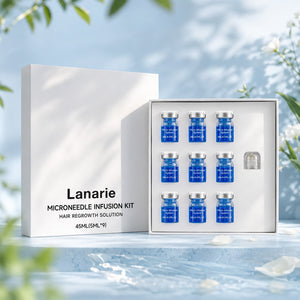
Lanarie Micro-Infusion
  • Delivers serum into the scalp, through micro-channels
  • Targets the part, crown, and temples directly
  • A copper peptide your body makes less of with age
  • A few minutes a week, at home
  • Works with your scalp, not on your hair

Three steps, then you're done

A few minutes, a couple of times a week.

01
Attach the head
Click the micro-infusion head onto a serum vial and part your hair.
02
Press against the scalp
Gently press along the part, crown, and temples with light pressure.
03
Let it absorb
The serum settles into the scalp. Done in a few minutes.
Lanarie Micro-Infusion Kit
The one that made sense

Lanarie Micro-Infusion Kit

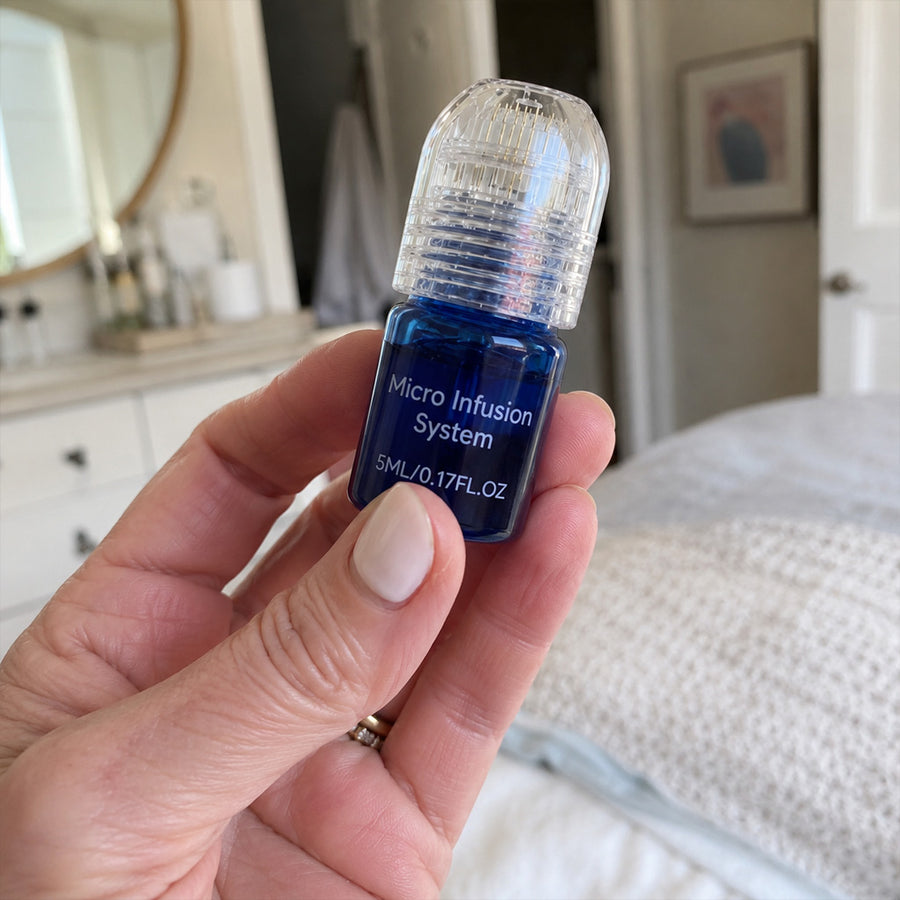
GHK-Cu Scalp Serum + Micro-Infusion Applicator

Built around GHK-Cu, the copper peptide your body makes less of with age. The micro-infusion head is what finally gets it into your scalp, where thinning starts — instead of leaving it on your hair.

See how the Micro-Infusion Kit works →

You're not out of options. You were just putting it in the wrong place.

Six things I got wrong, and it took me two years and $1,300 to sort them out. The one I'd tell you not to skip is #4.

This is a paid advertisement. The experience described is a representative account based on common customer feedback and may not reflect any single individual. The Lanarie Micro-Infusion Kit is a cosmetic scalp and hair product intended to support the appearance of fuller, healthier-looking hair. It is not intended to diagnose, treat, cure, or prevent any disease or medical condition. Individual results vary. If you have a medical condition affecting your hair or scalp, consult a healthcare professional.